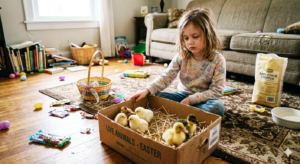
Every spring, as Easter approaches, chicks and ducklings appear in feed stores, pet shops, and online ads. They are tiny, fluffy, and irresistible. Many families bring them home with the best of intentions, believing they are giving their children a joyful seasonal experience.
Unfortunately, for many of these birds, that decision leads to neglect, abandonment, or death.
They Grow Fast, Not Slowly
Chicks and ducklings do not stay small for long. Within just a few weeks, they grow rapidly and require more space, stronger enclosures, and much more care. What seems manageable in a box on a kitchen counter quickly becomes overwhelming.
Families often do not realize how quickly a cute Easter chick becomes a full-size chicken or duck that needs daily cleaning, protection from predators, and proper nutrition.
They Are Messy and High Maintenance
Baby poultry produce surprising amounts of waste, and that only increases as they grow. Ducks in particular are extremely messy. They splash water, soak bedding, and require frequent cleaning to stay healthy.
Ducks also need access to water deep enough to submerge their heads so they can clean their eyes and nostrils. This is not optional. Without it, they can develop serious health problems.
Ducks Need Water and Space
Ducks are aquatic birds. They require space to swim and forage. A small backyard, bathtub, or kiddie pool is not enough for long term care. Most city ordinances and homeowner associations do not allow ducks at all.
When families discover this too late, the birds are often dumped at parks, ponds, or even our sanctuary.
Domestic Ducks Cannot Survive in the Wild
Domestic ducks and chickens are not wild animals. They were bred by humans and, in many cases, cannot fly or escape predators. Releasing them into parks or natural areas is not setting them free. It is a death sentence.
At sanctuaries like ours, we regularly find ducks thrown over fences, abandoned at city parks, or
left in areas where they have no chance of survival.
Sanctuaries Are Already Overwhelmed
Animal sanctuaries across the country see a sharp increase in abandoned poultry every spring.
Most sanctuaries are already full and operating at capacity. Many cannot take in more animals,
even when the need is urgent.
This leaves dumped birds vulnerable, injured, or suffering without care.
A Better Easter Lesson
If you want to teach children kindness and responsibility at Easter, there are better ways.
Consider visiting a sanctuary, supporting a rescue, learning about wildlife, or choosing plush
toys, books instead of live animals.
Animals are a long-term commitment, not a seasonal tradition.
Our Hope
With education and compassion, we can reduce the number of chicks and ducklings abandoned
every year. By choosing not to buy live animals as Easter gifts, families can help prevent
suffering and protect animals who depend entirely on us.
If you are unsure whether you can care for poultry long term, the kindest choice is not to bring
them home at all.
Volunteering at Gilcrease Animal Sanctuary is more than just community service—it’s a labor of love. Whether you’re looking to earn school or job-related volunteer hours, enjoy being outdoors, or want to give back to animals in need, we welcome compassionate individuals who are ready to roll up their sleeves.
You’ll help care for over 200 animals, maintain their enclosures, support our sanctuary grounds, and get hands-on experience that makes a real impact.