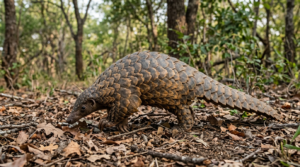
When people first see a pangolin, they often do a double take.
Is it a reptile? A dinosaur? Some kind of armadillo?
It is easy to see why.
Pangolins are covered in scales and move slowly and quietly., almost like they belong to
another time, and curl into a tight ball when they feel threatened.
They are mammals.
That means they are warm-blooded, they have hair (yes, even if it is sparse), and mothers nurse
their babies. In fact, baby pangolins will often ride on their mother’s tail as she walks through the
night. It is one of the sweetest sights in the animal world.
So why do they look like reptiles?
Those scales are the biggest source of confusion.
Pangolin scales are made of keratin, the same material as our fingernails and hair. They are not
like reptile scales at all. Instead, they act as armor. When a pangolin is threatened, it rolls into a
tight ball, protecting its soft underside. Even large predators have a hard time getting past that
defense.
Nature did not make a reptile. It made a mammal with built-in armor.
What do pangolins actually do all day?
Pangolins are quiet, mostly nocturnal animals that spend their nights searching for ants and
termites. Using their powerful sense of smell and long, sticky tongues, they can consume
thousands of insects in a single night.

And this is where their true importance comes in.
The hidden heroes of their ecosystem
Pangolins play a critical role in keeping ecosystems balanced.
By eating massive amounts of ants and termites, they help:
● Prevent insect populations from exploding
● Protect trees and vegetation from damage
● Maintain healthy soil systems
In many ways, pangolins are natural pest control.
Without them, termite populations can grow rapidly, which can damage forests and even impact
human structures. Their digging also helps aerate the soil, which supports plant growth and
overall ecosystem health.
They may be quiet and rarely seen, but their impact is powerful.
Understanding, not blaming
In some parts of the world, pangolins have been used in traditional practices, and there is still
belief that their scales may have healing properties.
Today, science has helped us better understand that these scales are made of keratin and do
not have proven medical benefits. As this knowledge spreads, more people and communities
are working together to protect pangolins and reduce demand.
This is an important reminder that conservation is not about pointing fingers. It is about learning,
growing, and making better choices with the information we have.
A gentle animal worth protecting
Pangolins are shy, non-aggressive animals. Their only real defense is to curl into a ball and
hope danger passes. They are not built to fight. They are built to survive quietly in the
background, doing their part to keep nature in balance.
The more we learn about animals like pangolins, the more we realize how important even the
most overlooked species can be.
And maybe that is the real lesson.
Sometimes the animals that look the strangest are the ones the world needs the most.